
Can LiteRT.js Power Smarter Web AI?
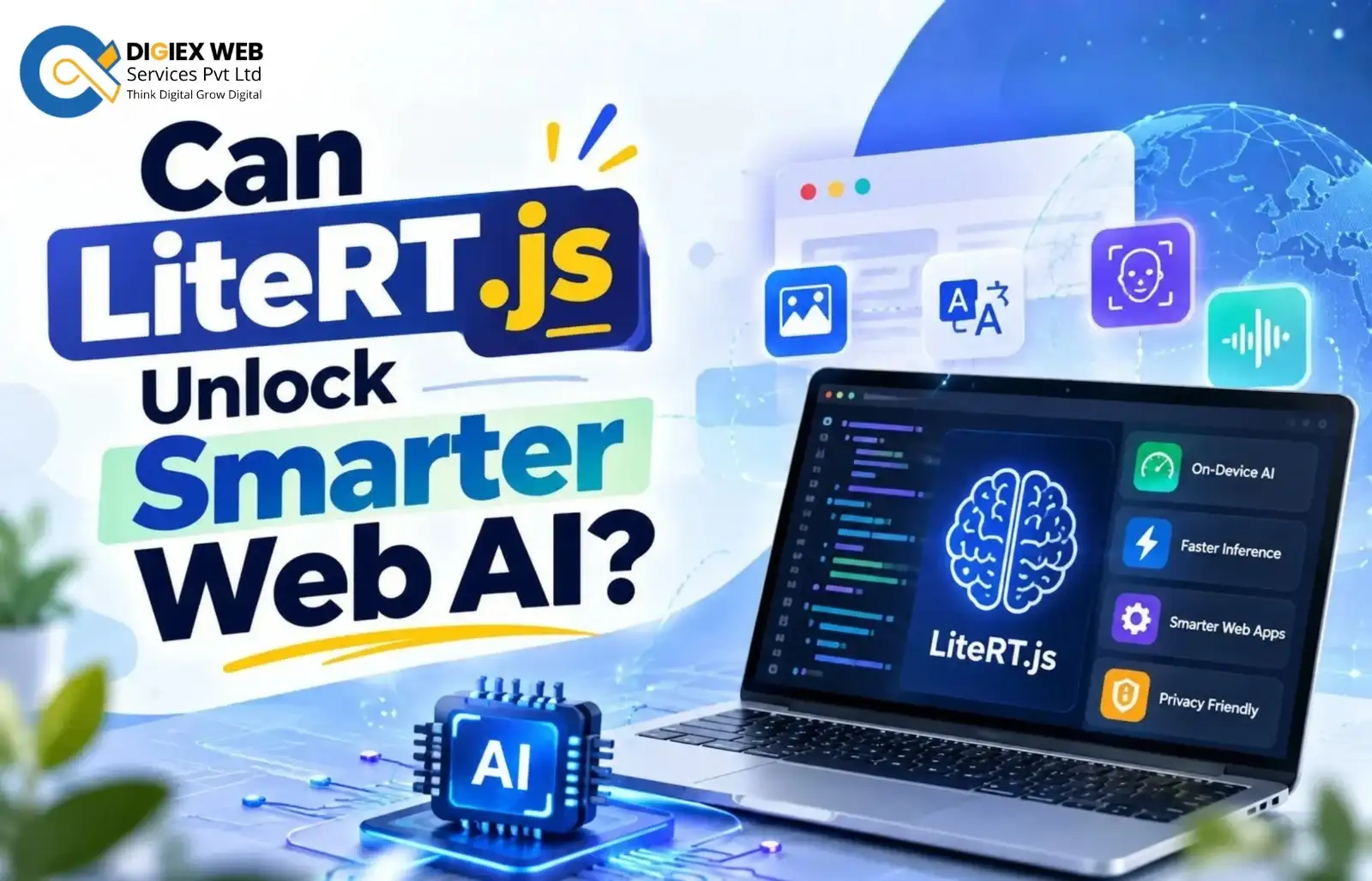
LiteRT.js brings high-performance AI model inference directly to web applications, helping developers run machine learning tasks on the client side. But can developers use LiteRT.js for client-side AI? Yes, developers can explore browser-based inference for faster, responsive experiences. With the right optimization, businesses can build practical AI-powered websites while reducing reliance on constant server-side processing.
For businesses seeking a Best Web Development Company in Kolkata, LiteRT.js opens new possibilities for browser-based AI. Developers can use LiteRT.js model inference documentation to understand supported workflows, model conversion, runtime integration, and performance considerations. As a result, a LiteRT.js web application development company can create responsive AI experiences closer to the end user.
What Is LiteRT.js and Why Does It Matter?
LiteRT.js is designed to bring machine-learning inference into web environments. Instead of sending every AI task to a remote server, developers can run compatible models within the browser.
This approach can support:
- Client-side AI inference
- Interactive web applications
- Browser-based machine learning
- Lower server dependency for selected workloads
- More responsive AI interactions
- Privacy-conscious processing where appropriate
- AI-powered user interfaces
Therefore, businesses exploring modern web development can consider LiteRT.js as part of a broader Web AI development strategy.
Can Developers Use LiteRT.js for Client-Side AI?
Yes. LiteRT.js can enable compatible machine-learning models to perform inference on the client side. Developers can integrate the runtime into web applications and optimize model execution according to browser, device, model, and performance requirements.
However, client-side inference does not automatically suit every AI workload. Model size, device capability, browser support, latency, memory usage, and application requirements should guide implementation decisions.
How Does LiteRT.js Model Inference Work?
A typical workflow involves several stages:
| Stage | What Developers Do |
| 1. Select a model | Identify a model suitable for the intended AI task |
| 2. Prepare the model | Convert or optimize the model for the required runtime |
| 3. Add LiteRT.js | Integrate the runtime into the web application |
| 4. Load the model | Make the compatible model available to the application |
| 5. Run inference | Send suitable input data to the model |
| 6. Process results | Display predictions or AI-generated outputs |
| 7. Optimize | Improve loading, memory use and inference performance |
Developers should consult the LiteRT.js model inference documentation before implementation because supported APIs, model requirements, and runtime capabilities can change.
What Can a LiteRT.js Web Application Development Company Build?
A LiteRT.js web application development company can explore several browser-based AI use cases, depending on model compatibility and application requirements.
AI-Powered Interactive Tools
Websites can incorporate AI features that respond to user inputs without sending every interaction to a backend service.
Image and Vision Experiences
Compatible machine-learning models can potentially support browser-based image analysis and other computer-vision workflows.
Smart User Interfaces
AI inference can help create interactive interfaces that respond dynamically to user activity.
Real-Time Web Experiences
When device and model performance allow it, client-side inference can support responsive experiences where minimizing network round trips matters.
Why Choose a LiteRT.js Web AI Development Company in Kolkata?
Businesses looking for a LiteRT.js web AI development company Kolkata can evaluate development expertise beyond basic website creation. Check our Web development portfolio click the link: https://digiexweb.com/portfolio/web-development-portfolio
A capable development partner should understand:
- Modern JavaScript development
- Web application architecture
- Machine-learning model integration
- Client-side inference
- Performance optimization
- Browser compatibility
- Responsive UI development
- API and backend integration
- Security and data-handling considerations
- AI application testing
For Digiex Web Services Pvt Ltd, led by Arup Mondal, this topic can become part of a broader content cluster around AI-ready websites, modern web application development, browser AI, machine-learning integration, and emerging web technologies. Vheck our client’s Case Study click the link to learn more: https://digiexweb.com/case-studies
LiteRT.js vs Server-Side AI Inference
Client-side inference and server-side inference serve different application requirements.
| Factor | Client-Side LiteRT.js | Server-Side AI |
| Processing location | User’s device/browser | Remote server |
| Network dependency | Can reduce repeated requests | Often requires network communication |
| Device impact | Uses local resources | Uses server resources |
| Deployment | Model delivered to client | Model remains server-side |
| Privacy considerations | Data may stay on device for suitable workflows | Data may travel to server |
| Scalability | Uses users’ device resources | Requires backend infrastructure |
| Best fit | Selected interactive browser AI | Larger or centralized AI workloads |
Neither approach works universally. The appropriate architecture depends on model requirements, security, latency, infrastructure, and user experience.
What Are the Benefits of LiteRT.js for Web Development?
Several potential benefits make browser AI worth investigating.
Faster Interactive Experiences
When inference happens locally, applications may reduce the need for repeated server communication.
Reduced Backend Dependency
Some AI workloads can operate without sending every input to a remote inference server.
New AI-First Experiences
Developers can create websites where machine learning becomes part of the user interface rather than an isolated backend feature.
Potential Privacy Advantages
For suitable applications, processing data locally may reduce the amount of information transmitted to external servers. Developers should still evaluate the complete data flow and application architecture.
Modern Web AI Development
LiteRT.js fits into the growing ecosystem of browser-based machine learning and AI-powered web applications.
How Should Businesses Plan LiteRT.js Web Application Development?
Before starting development, businesses should answer several practical questions:
- What AI problem should the application solve?
- Is the selected model compatible with the intended runtime?
- Can target devices handle the model efficiently?
- What browser environments must the application support?
- Does the model need to run offline or with limited connectivity?
- What data should remain on the user’s device?
- How will model files affect initial page loading?
- What fallback should the application provide when client-side inference is unsuitable?
- How will performance be measured?
- Does the application require a hybrid client-server architecture?
This planning process helps turn an experimental AI feature into a practical web product.
LiteRT.js and the Future of AI-Ready Websites
The evolution of web AI is moving beyond conventional forms, dashboards, and static interactions. Browser-based inference creates opportunities for websites to become more intelligent and responsive.
For a Best Web Development Company in Kolkata, understanding technologies such as LiteRT.js can strengthen an AI-focused development strategy. More importantly, developers should connect the technology to genuine user needs instead of adding AI merely as a feature.
Building an AI-Ready Web Development Strategy
A sustainable strategy can combine:
- AI model integration
- Modern JavaScript frameworks
- Client-side inference
- Cloud and server-side AI
- Responsive UX
- Performance engineering
- Secure data handling
- Continuous model evaluation
Together, these technologies can support a stronger foundation for AI-enabled web applications.
Conclusion
LiteRT.js represents an exciting direction for browser-based AI inference, enabling developers to explore responsive, client-side machine-learning experiences. However, successful implementation requires thoughtful model selection, performance testing, browser compatibility, and architecture planning. For businesses, partnering with an experienced Best Web Development Company in Kolkata can help transform emerging Web AI capabilities into practical, user-focused applications. Check map link: https://maps.app.goo.gl/Rn2C7iyKVQ832Dsz9
Frequently Asked Questions
What is LiteRT.js used for?
LiteRT.js is intended for machine-learning inference in web environments, allowing compatible models to execute within web applications.
Can LiteRT.js run AI models in a browser?
Yes, compatible models can be used for client-side inference in supported web environments, subject to model, browser, and device requirements.
Is LiteRT.js suitable for every AI application?
No. Large models, demanding workloads, sensitive architectures, or applications requiring centralized processing may need server-side or hybrid approaches.
Does LiteRT.js eliminate the need for backend AI?
No. It can complement server-side AI rather than replace it. Developers should select the architecture according to workload and application requirements.
Why use LiteRT.js for web applications?
It can enable browser-based AI inference and potentially reduce repeated communication with an inference server for suitable workloads.
What should developers check before using LiteRT.js?
Developers should examine model compatibility, runtime requirements, browser support, device performance, model size, memory consumption, and application architecture.
Can businesses build LiteRT.js applications in Kolkata?
Yes. Businesses can work with a LiteRT.js web application development company to evaluate model integration, browser inference, UI development, performance optimization, and deployment requirements.
Recent Posts

How Can You Secure Your WordPress Website in 2026?
October 16, 2026 | Admin

Can AI Search Help Customers Discover Your Business Before Competitors?
October 9, 2026 | Admin
Can WebMCP Turn Any Website Into an AI Interface?
October 1, 2026 | Admin

Which Website Platform Fits Your Business Best?
September 18, 2026 | Admin